Packaging is the part your customer actually opens
The garment is the product. The box is the first thing anyone touches — and at small volumes it is the cheapest way to look like a much larger brand than you are.
· 5 min read · Minimalistic Garments · Packaging
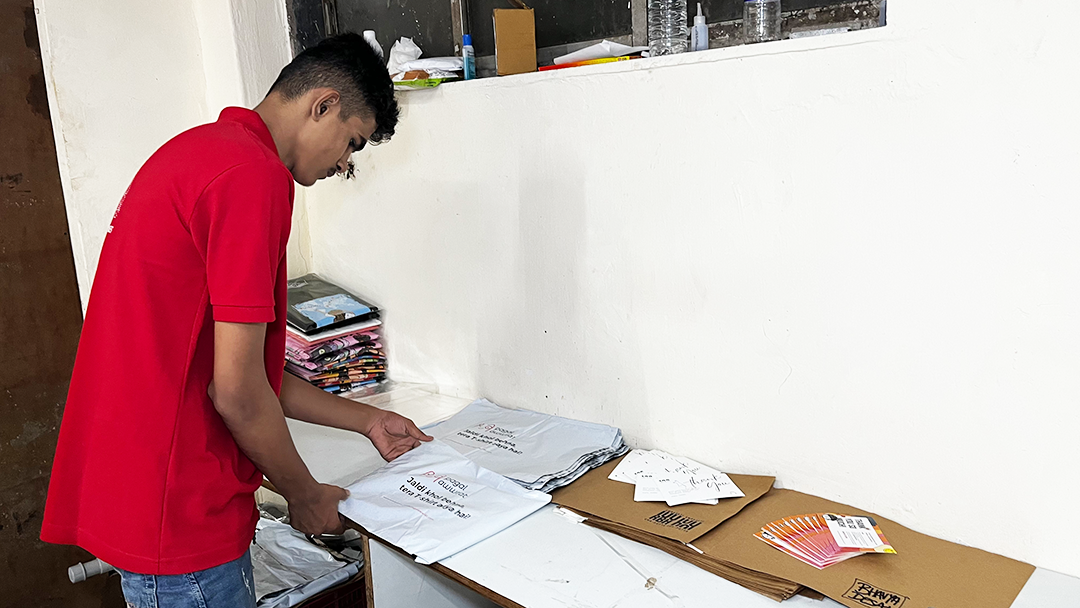
Everything that goes into a garment is invisible at the moment of delivery.
The pattern, the pre-shrinking, the three quality checks, the twenty years of printing experience — your customer takes all of it on trust. They cannot see any of it. What they experience, in order, is: a parcel arrives, they open it, and something is inside.
That sequence is the first physical fact about your brand. It happens before they have tried the garment on, and it sets what they expect from the thing inside.
Which is why it is strange how often packaging is the last decision, made in a hurry, on price.
The gap between the garment and the parcel
A well-made garment in a poor parcel does not read as a well-made garment that someone economised on. It reads as a cheaper garment.
People do not separate the two. The polybag that arrived creased, the tag printed slightly off-centre, the box a size too big so the contents slid around — none of these are consciously assessed. They just lower the ceiling on what the customer thinks they are holding before they have properly looked at it.
The reverse is also true, and it is the useful bit: a modest garment, thoughtfully packed, reads as more considered than it is. This is the one place in the whole process where a small brand can genuinely punch above its size, because good packaging is not gated by scale the way most quality is.
Tags and labels
The tag is doing more work than its size suggests. It is often the only place your brand name appears in the customer's hands.
The main decision is printed versus woven. A printed tag is cheaper and perfectly respectable. A woven label — where the design is made from the threads rather than printed onto them — costs meaningfully more per unit and is instantly recognisable by touch. It is one of a handful of details that people register as "proper clothing" without being able to say why.
If you are choosing one upgrade in this whole article, it is usually this one.
Care labels are less exciting and worth getting right anyway: wash temperature, drying, ironing. Partly because it is expected, largely because a customer who washes a garment wrongly and ruins it holds you responsible for it.
Neck labels are worth a thought too. Printed-on neck labels sit flat and avoid the itch that makes people cut tags out — which is worth considering, given that a tag someone has removed with scissors is no longer doing any brand work at all.
Boxes, wraps and what goes inside
The main mistake is a box that is too big.
An oversized box means the garment moves in transit, arrives creased, and gives the immediate impression of something rattling around in a container meant for something else. Sized correctly, the garment arrives folded the way it left, which is most of the effect people mean when they say packaging feels premium.
Tissue wrap is cheap and does a disproportionate amount of work — it adds a step. The customer opens the parcel, and there is another layer before the product. That small delay is essentially the whole psychology of unboxing.
Inserts — a card, a note, a discount for the next order — are optional and mostly useful for the sentence they carry rather than the object. A short printed thank-you from a real person outperforms a designed card with nothing to say.
Stickers, seals and printed tape are the cheapest branding per unit available anywhere, and they work because they are seen before the parcel is opened.
Eco-friendly options, honestly
We offer recycled and biodegradable materials, and they are worth taking seriously if sustainability is genuinely part of your brand.
They cost more. Not enormously, but enough to notice at small volumes, and the finish is sometimes slightly less refined — recycled kraft looks like recycled kraft, which is a look you either want or do not.
The honest guidance: choose it if it is a real commitment you will talk about, not as a hedge. Customers are quick to spot a brand that has bought one recyclable mailer and put a leaf on the website. Half-committed sustainability reads worse than none.
If you can only upgrade one thing
Most first-time brands come to us with the packaging budget already mostly spent on the garment, which is the correct priority. So: what is the one upgrade worth making?
Get the box size right, then buy a woven label.
Box size costs nothing to fix. It is a decision, not a spend, and it removes the single most common reason a parcel feels cheap.
The woven label is the one thing on this list that a customer will physically touch and register as a mark of a real brand. Everything else — tissue, stickers, inserts, printed tape — is worth doing and can wait for the second run.
What we would not spend early money on: elaborate rigid boxes, foil, custom die-cut inserts. They are lovely, they are expensive per unit at low volumes, and they are the first thing that becomes unaffordable when you scale. Better to find something good that still works at ten times the quantity, so your third drop looks like a continuation of your first rather than a downgrade.
Where this happens
Packing is done here, in the same building the garments are made in, by two people whose entire job is that the thing in the box looks the way it should.
It is the least glamorous role on the floor and one of the most consequential, because it is the only part of our work your customer meets directly on day one.